Resale Value Price Check・Cluzy
- 4.6
- Rating
- 10.00K
- Installs
- Free
- Price

 Analysis by App-foxy
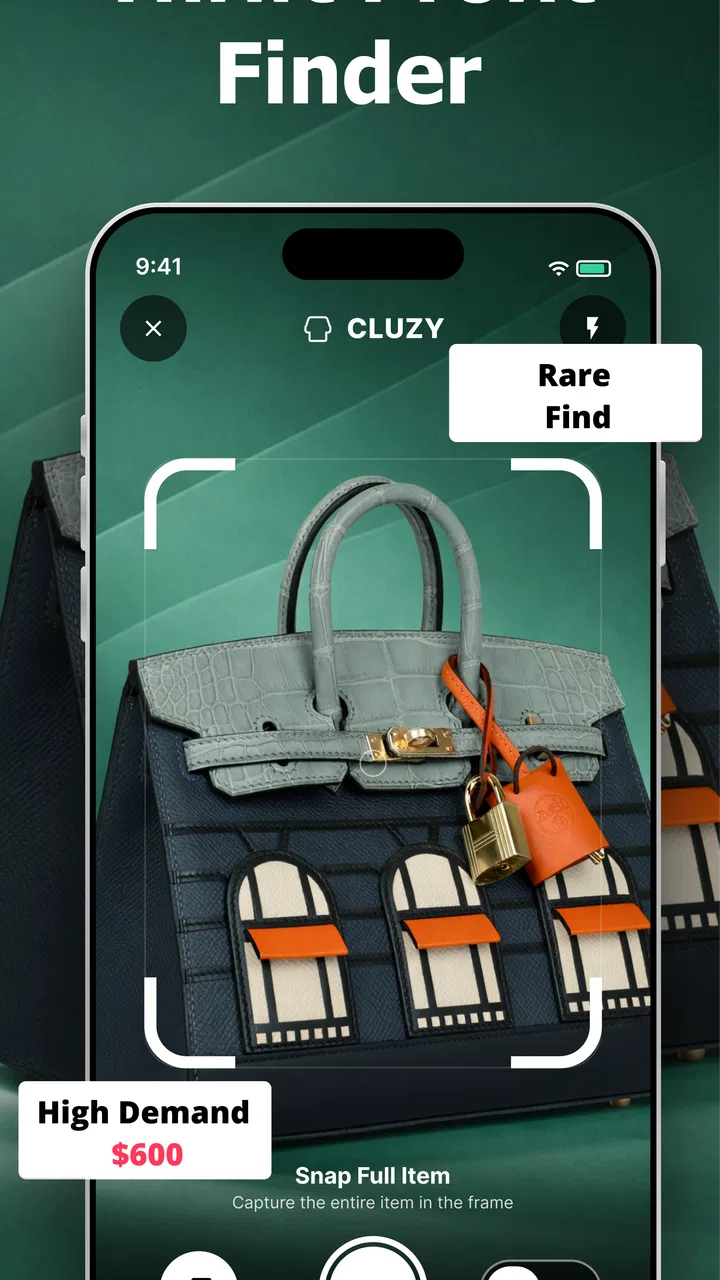
I tend to be cautious with resale tools because a quick price estimate can feel more authoritative than it really is. Resale Value Price Check・Cluzy takes a practical approach: it is a lifestyle app from Victor Edu built around scanning an item, identifying what you have, and checking its possible resale value. That makes it interesting for estate-sale browsing, thrift shopping, decluttering, and anyone who regularly wonders whether an overlooked object is worth researching.
My first impression is that Cluzy is aimed at reducing the annoying first step in resale research. Instead of opening several marketplaces and guessing search terms, you can begin with the item in front of you. The app is free to install, rated for Everyone, and currently listed at version 1.0.7 for devices running Android 8.0 or later. It has passed the early curiosity stage with a 4.6 average from around 1.2 thousand ratings and more than 10 thousand installs, which gives it a useful level of public interest without making it feel like an established authority.
How Cluzy fits into real resale research
The most useful way to think about Cluzy is as a starting point, not a final pricing judge. A scan may help me recognize a brand, product type, or potentially collectible object, but resale value depends on details a camera cannot always settle: exact model, size, edition, condition, completeness, local demand, and whether the item is actually selling rather than merely listed. I would use the result to decide whether an object deserves closer attention, then verify the important details elsewhere.
You May Also Like

 AccuWeather: Weather Radar
AccuWeather Review: A Quick, Clear Forecast for Everyday Decisions
For everyday plans, the best forecast is the one you can understand quickly. AccuWeather makes rain timing, radar, and local conditions easy to act on, with a few trade-offs.

 Hill Climb Racing
Why Hill Climb Racing Still Turns Crashes Into One More Run
A tiny car, a bumpy hill and one more upgrade: Hill Climb Racing keeps resurfacing because its simple chaos makes every near-miss feel personal.

 AliExpress - Shopping App
AliExpress Makes Global Shopping Feel Personal, but Shoppers Bear the Risk
AliExpress turns a global marketplace into a pocket-sized discovery engine. Its reach is useful, its shopping loop compelling, and its trade-offs easy to miss.

 Lords Mobile: Kingdom Wars
Lords Mobile Is a Kingdom-Building Routine, Not a Quick Match
A case-by-case verdict on the building, battles, device demands, and social commitments that make Lords Mobile rewarding for some players and exhausting for others.

 PDF Scanner app - TapScanner
TapScanner Makes Paperwork Easier to Capture, Check, and Share
TapScanner makes scanning with a phone feel less like a rescue operation and more like a dependable step in getting work done. Its capture tools are useful, though not flawless.

 Block Blast!
 Shows How Much a Puzzle Game Can Leave Out
A quiet grid game shows why puzzle players increasingly value instant clarity, repeatable skill and low-pressure play—and where the genre still needs to catch up.
More From Our News Desk
View All News


That distinction matters at an estate sale. Imagine finding a small piece of audio equipment in a crowded room. The label is partly hidden, the seller is busy, and there is no convenient way to research it properly. A quick scan can help me decide whether to put it in the “investigate further” pile or leave it behind. I would still inspect the model number, check for missing cables, look for damage, and compare completed sales before spending serious money.
For decluttering, the workflow is slightly different. I can scan several objects before deciding what deserves a careful listing. That is more useful than treating every household item as a research project. Cluzy can help separate likely resale candidates from items that are probably better donated, recycled, or sold in a low-effort bundle. The time saved comes from prioritization rather than from magically producing a guaranteed selling price.
The app also makes sense for people who enjoy thrift stores but do not know every brand or product category. A scan can provide a research lead when visual recognition fails. That is particularly helpful with unfamiliar kitchenware, electronics, decorative pieces, books, accessories, or vintage-looking goods. The limitation is that recognition and value are not the same thing. A recognizable brand may have weak demand, while an ordinary-looking item may be valuable because of a rare variation.
What I would check before trusting a result
I would begin with a clean, well-lit view of the item and make sure the most informative label or mark is visible. If the object has several identifiers, I would scan the clearest one first and then compare the result with the physical item. This simple habit prevents a common mistake: accepting an identification that is close in appearance but wrong in model or edition.
For anything with a serial, model, pattern, or edition number, I would treat that detail as more important than the broad category. “Vintage camera” is not enough to price a camera responsibly. The lens, included accessories, working condition, and exact version can change the result dramatically. Cluzy is most useful when I use its scan to narrow the search and then manually confirm those specifics.
Condition deserves its own pass. I would photograph or inspect scratches, stains, cracks, missing parts, fading, repairs, and signs of use before comparing prices. A clean example and a damaged example may share the same identity but have very different resale prospects. This is one of the app’s practical trade-offs: it can speed up recognition, but it cannot replace an honest condition report from the seller.
I would also separate asking prices from realistic outcomes. A marketplace search can show ambitious listings that remain unsold for months. If Cluzy points me toward a product with many high prices, I would not assume those numbers represent what buyers actually pay. The safest workflow is to use the app for discovery, compare several relevant examples, and reduce expectations when the item is incomplete or difficult to ship.
Trust starts with what the app visibly lets me control
Because Cluzy works with item scans, I pay attention to the moment before using the camera. I want to know what I am choosing to capture and whether the screen gives me a clear opportunity to proceed or back out. A good routine is to avoid pointing the camera at paperwork, faces, addresses, or anything unrelated to the object. Even when I am scanning a box at home, I would keep private labels and personal documents outside the frame.
I would apply the same care to estate-sale photos. Tables can contain receipts, family photographs, shipping labels, or handwritten notes beside the object being researched. Framing only the item is a small but meaningful form of data minimization. It keeps the scan focused and reduces the chance of exposing information that has nothing to do with resale research.
Account control is another practical consideration. I would look for whether the app allows me to use its core workflow without entering more personal information than necessary, and I would avoid sharing contact details simply to test a single scan unless the reason is clear. If Cluzy asks for an account during a later step, I would read the screen carefully and distinguish a genuinely useful account feature from an optional registration prompt.
I would not treat a familiar camera interface as proof that every data practice is harmless. The right approach is to review the permission prompt, notice whether access is requested only when I use scanning, and check the device settings afterward. If I stop using the app, I would remove camera access and review any account or stored-content controls available on the device. These are ordinary precautions, but they are especially relevant for an app whose main interaction involves images.
The developer is Victor Edu, and Cluzy is still a relatively young product. That makes visible controls more important to me than polished presentation. I want clear choices around camera access, sign-in, saved results, and deletion if those options appear in the app. I would not assume that a scan is private, permanent, or automatically removed without reading the wording shown in the app and its system prompts.
Where the app can save time, and where it cannot
The strongest benefit is the reduction of search friction. Normally, I might take a photo, crop it, guess a description, search several marketplaces, and repeat the process with different terms. Cluzy gives that process a more direct opening. For a pile of mixed items, that first-pass convenience can make the difference between researching five objects and researching none.
A less obvious advantage is decision discipline. When I scan an item before buying it, I am less likely to rely only on excitement or a seller’s claim that something is rare. The result becomes a prompt to ask better questions: What is the exact version? Is it complete? Are comparable items actually moving? How much will packing and shipping cost? In that sense, Cluzy can improve judgment even when its estimate is only a rough guide.
It is also useful for building a research queue. I would record the objects that deserve a second look, then inspect them in a calmer setting. That prevents me from blocking an aisle or making a rushed purchase while trying to solve every uncertainty on the spot. The best outcome is not always buying the item; sometimes it is quickly deciding that the possible margin is too small for the effort involved.
Still, the app should not be the only tool for specialist categories. Experienced sellers may prefer direct searches using model numbers, collector catalogs, specialist forums, or marketplace sold-item filters. Those methods take longer but can reveal subtle variations that image-based identification misses. If I already know the category well, Cluzy may be a convenient shortcut rather than a major improvement.
There is another trade-off around low-value items. A scan may identify something correctly, yet the potential resale amount may not justify cleaning, photographing, listing, answering messages, packing, and shipping it. I would estimate the complete workload, not just the displayed value. For inexpensive household goods, local bundles or donation may be the more sensible choice even when resale is technically possible.
In-app purchases and the cost of going further
Cluzy is free to download, but in-app purchases are listed from $5.99 to $89.99 per item. That range makes it important to understand what is included before paying. I would begin with the free experience, identify the exact point at which a purchase is offered, and ask whether the added information changes my decision enough to justify the cost.
I would be especially careful before using a paid result for a high-volume resale workflow. A single scan can feel inexpensive when I am checking one promising object, but repeated purchases can quickly affect the margin on ordinary finds. I would calculate the cost against expected profit, transport, platform fees, supplies, and my time. If the paid feature does not improve those decisions, the free workflow plus manual research may be better value.
For a casual user, the purchase structure may be less of a problem if most browsing is occasional. For a serious reseller, it deserves closer scrutiny. I would test whether the information is specific enough to justify payment and whether it helps with the exact category I sell. A broad estimate is less valuable to me than a dependable identification of a particular model, and I would not pay simply because an item looks old or unusual.
Who should use it, and who should choose another route
I would recommend Cluzy to a beginner who wants a faster way to decide what is worth investigating. It is also a good fit for occasional estate-sale visitors, thrift shoppers who lack category knowledge, and people sorting a home full of mixed belongings. The app’s value is highest when the alternative is giving up before research even begins.
I would be more cautious recommending it as the sole tool for professional pricing. Dealers handling expensive jewelry, rare collectibles, specialist instruments, or items with many near-identical variations need stronger verification. In those situations, a specialist reference, experienced appraiser, or carefully filtered sales history may be more appropriate. Cluzy can still provide a lead, but the financial risk of a wrong identification is too high for me to rely on a quick scan alone.
I would also skip it if I mainly want a full inventory system, detailed bookkeeping, listing automation, or shipping management. Its central appeal is item recognition and resale research, not an entire selling operation. Someone looking for a complete resale business dashboard may be better served by a marketplace seller tool or a spreadsheet-based workflow that records costs and outcomes in detail.
Privacy-conscious users should take a deliberate approach rather than an automatic one. I would use the narrowest camera framing possible, read each permission prompt, and avoid scanning anything containing personal information. If the app’s visible choices do not match my comfort level, I would use manual research instead. A slower process is reasonable when the object is surrounded by sensitive material.
My practical workflow for using Cluzy responsibly
I start by deciding whether the item is worth a quick check. I look for labels, model numbers, maker’s marks, and completeness before opening the scanner.
I frame only the object or its relevant identifier. I keep faces, addresses, receipts, and unrelated paperwork out of view, then review the permission prompt before granting camera access.
I compare the identification with the physical item. If the color, size, model marking, or included parts do not match, I treat the result as uncertain and do not use it to set a price.
I estimate the real resale effort. I consider cleaning, testing, storage, packing, postage, platform charges, and the time needed to answer buyers.
I use independent checks for anything valuable. I compare relevant sold examples, inspect condition closely, and avoid confusing optimistic asking prices with completed transactions.
I only consider an in-app purchase after seeing exactly what it adds. The listed purchase range is wide enough that I would never approve one without checking the amount and the likely benefit.
This workflow turns Cluzy into a filter for attention rather than a substitute for judgment. The most useful result may be “research this further,” not a number that sends me straight to a listing page. That mindset protects against overpaying at an estate sale and overpromising to a future buyer.
My cautious verdict on Cluzy
After looking at the app as a real tool rather than a magic pricing button, I see a focused and approachable idea. Cluzy makes the first stage of resale research less tedious, especially when I am facing unfamiliar objects or a large group of potential finds. Its free entry point and Everyone rating make it easy for casual users to try, while the current version shows that the product is actively presented as a usable app rather than merely a concept.
My trust in it would depend on how clearly the app handles camera access, account choices, saved scans, and any paid step during actual use. I would keep those decisions visible and intentional, avoid capturing private surroundings, and never assume that an item image should contain more information than the item itself. Those habits matter as much as the scan result.
The central trade-off is simple: Cluzy can save time on identification, but it cannot remove the uncertainty built into secondhand markets. Condition, demand, authenticity, shipping, and local selling conditions still require human checking. If I remember that, the app becomes genuinely useful. If I treat its estimate as a guaranteed sale price, it can encourage poor purchases.
My recommendation is to try Cluzy as a cautious research companion, not as an authority. It is a sensible choice for thrift shoppers, estate-sale browsers, and beginners who need help deciding what deserves attention. I would choose a specialist or manual method for expensive or highly technical items, and I would avoid paying for extra information until I understood its practical value. Used with that level of restraint, Cluzy has a clear place in a smart resale workflow.
FAQs for Resale Value Price Check・Cluzy
01What is Resale Value Price Check・Cluzy used for?
Resale Value Price Check・Cluzy is designed to help users estimate the likely resale value of products before buying, selling, or trading them. It can be useful for checking whether an item appears fairly priced, comparing potential offers, and making more informed decisions in secondhand marketplaces. Results should be treated as guidance rather than a guaranteed selling price, since demand, condition, location, and timing can all affect the final value.
02How accurate are the prices shown by Cluzy?
The price estimates provided by Cluzy should be viewed as approximate reference figures, not professional appraisals. Actual resale prices may differ depending on the item’s condition, age, accessories, packaging, warranty, popularity, and current market demand. Listings may also sell for less or more than expected because of negotiation, shipping costs, seasonal trends, or regional differences. It is best to compare the result with recent marketplace listings.
03What information do I need to enter for a price check?
The information required can vary depending on the product being evaluated, but users should generally be prepared to provide details such as the brand, model, variant, age, condition, and included accessories. Clear and accurate information usually leads to a more useful estimate. If the app supports photos or product identification, well-lit images and readable model details can also help produce a more relevant result.
04Is Resale Value Price Check・Cluzy free to download and use?
The app may be available to download without an upfront charge, but some features can depend on the developer’s current pricing model. Certain tools, advanced checks, unlimited searches, or other functions may require in-app purchases or a subscription. Before using the service extensively, review the App Store or Google Play listing and the in-app purchase screen so you understand any costs, trial periods, renewal terms, and cancellation requirements.
05Does Cluzy guarantee that I can sell an item for the estimated price?
No. A resale estimate is not a guarantee, offer, or promise that another person will purchase the item at that amount. The final sale price depends on the product’s actual condition, buyer interest, competition, platform fees, shipping arrangements, and how effectively the listing is presented. Use Cluzy as a starting point, then verify comparable completed sales and adjust your asking price realistically.
Pros
- Quickly estimates resale prices for used items.
- Useful for comparing listings before buying or selling.
- Simple interface makes price checks easy for beginners.
- Can help identify underpriced items and potential deals.
- Convenient reference for planning secondhand purchases.
Cons
- Estimates may vary by brand
- condition
- and local demand.
- Results may not reflect current prices in every region.
- Limited value for rare or highly specialized products.
- Users may need to verify prices across other marketplaces.
- Price checks depend on the availability of comparable listings.

Resale Value Price Check・Cluzy
Gallery